























When sleep feels light, broken, or hard to start, it is natural to look for simple habits that may help. One question comes up often: can earthing improve sleep quality? Grounding research is still developing, but several small studies have explored what happens when people are conductively connected to the Earth while they rest. If you are new to the idea, start with the science and grounding research behind earthing.
Bottom line: Small studies suggest grounding may support sleep for some people, especially by helping with stress, discomfort, and cortisol rhythm. The research is promising but not yet conclusive. Earthing works best as one part of a steady sleep routine, not as a replacement for medical care. For most people, it is a low-risk, low-effort habit worth trying for several weeks to see if it makes a difference in how rested they feel.
Browse grounding footwear for daily wear if you want an easy way to bring more grounded time into your evening routine.
Earthing Improve Sleep Quality Grounding Research: What Does Research Say About Earthing and Sleep?
Earthing, also called grounding, means making a conductive connection between your body and the Earth's surface. Outside, bare feet on grass, soil, or sand can create that contact. Indoors, research studies have often used conductive mats, sheets, or mattress pads connected to a grounded outlet. The core question researchers keep coming back to is straightforward: does restoring the body's natural electrical connection to the ground influence how well people sleep?
In short, current research suggests grounding may support better sleep by lowering nighttime stress signals and helping normalize the body's daily cortisol rhythm. Study participants consistently report feeling more rested, falling asleep faster, and waking less often. These results are consistent across several small trials but have not yet been confirmed in large-scale studies.
The link to sleep is not based on a single result. Researchers have looked at several pieces that can affect a good night: how quickly people fall asleep. How often they wake, how rested they feel, stress, and nighttime discomfort. Each study adds a clue, but none alone gives a complete answer.
A frequently cited 2004 pilot study looked at grounded sleep and cortisol. The researchers reported changes in nighttime cortisol patterns that moved closer to a normal 24-hour rhythm. Participants also reported better sleep and less pain or stress. These results are interesting, but the study was small. It cannot tell us that grounding will work the same way for everyone.
More recent research has added to the picture. A 2025 randomized, double-blind, placebo-controlled study reported lower stress, insomnia severity, and daytime sleepiness among people using earthing mats. That type of design is stronger than a simple before-and-after report because it controls for the placebo effect. Even so, one study is not the final word. The overall evidence base is still limited, and larger independent studies are needed before anyone can make strong claims.
How Grounding May Regulate Cortisol Rhythms for Better Rest
Cortisol is sometimes called the stress hormone. It is not bad. Your body needs it. The key is timing. Cortisol should generally be higher in the morning to help you wake up and lower at night as your body prepares for rest. When this daily rhythm is disrupted, sleep often suffers.
The leading theory from grounding research is that connecting the body to the Earth may help normalize the daily cortisol curve. In the 2004 pilot study, participants who slept grounded showed a shift in cortisol secretion toward a more typical morning-high, evening-low pattern. This change correlated with self-reported improvements in sleep quality, pain, and emotional stress.
When stress stays high late in the day, sleep can feel harder. Your mind may race. You may wake more often. The early grounded-sleep research found a shift in cortisol secretion toward a more typical daily pattern. That finding gives researchers one possible pathway to study. It does not mean grounding directly treats stress disorders, insomnia, or hormone problems.
Think of grounding as a low-effort wellness practice that may help your body settle. It pairs well with basics that have stronger evidence: a regular wake time. Daylight early in the day, a cool dark room, less late-night caffeine, and a screen-free wind-down. For a deeper look at the mechanisms researchers are exploring, visit Harmony 783's science of grounding and earthing page.

Comparing Earthing Sleep Study Results
It helps to look at the studies with both curiosity and care. The table below shows what several research approaches found, along with what they cannot prove. The pattern across studies is more meaningful than any single result.
Across multiple small trials, grounded participants reported better sleep quality, lower stress, and fewer nighttime disruptions compared to non-grounded controls or their own baselines. While each study has significant limitations, the consistency of the direction is worth noting.
| Study approach | Timeframe | Reported result | Important limit |
|---|---|---|---|
| Grounded mattress pad pilot study | 8 weeks | Participants reported improved sleep, less pain, and less stress. | Small pilot work, so results may not apply to everyone. |
| Grounding sheet study | 12 weeks | Reported improvements included sleep length, time to fall asleep, and awakenings. | Self-reported sleep can be affected by expectation and other routine changes. |
| Randomized earthing-mat study | Several weeks | Lower stress, insomnia severity, and daytime sleepiness than the placebo group. | More research is needed to confirm results in larger, diverse groups. |
What stands out is the pattern, not a promise. Across these studies, participants often reported calmer sleep, fewer disruptions, or less discomfort. But researchers still need larger trials that use objective sleep measurements, compare different grounding methods, and follow people for longer. If you use sleep tracking, treat it as a personal observation tool. Notice how you feel in the morning, how long it takes to fall asleep, and whether your routine is consistent. Do not expect one night to give you a clear answer.
Discover grounding sandals for comfortable time outdoors or around the house before bed.
How Long Do You Need to Ground Before Sleep Improves?
There is no proven timeline that fits everyone. Some study participants noticed changes over days or weeks. The grounded-bedding pilot followed people for eight weeks, while another study tracked results over twelve weeks. That tells us consistency matters more than a single session.
A realistic expectation is to try a grounding routine consistently for two to four weeks before evaluating the effects. The available research suggests that benefits appear gradually rather than overnight, and they correlate more with total grounded hours over time than with any single session length.
A practical approach is to try a simple routine for two to four weeks. Keep the rest of your sleep habits as steady as you can. Write down a few notes each morning: bedtime, wake time, how long you think it took to fall asleep, and how rested you feel. This makes it easier to see a trend without guessing.
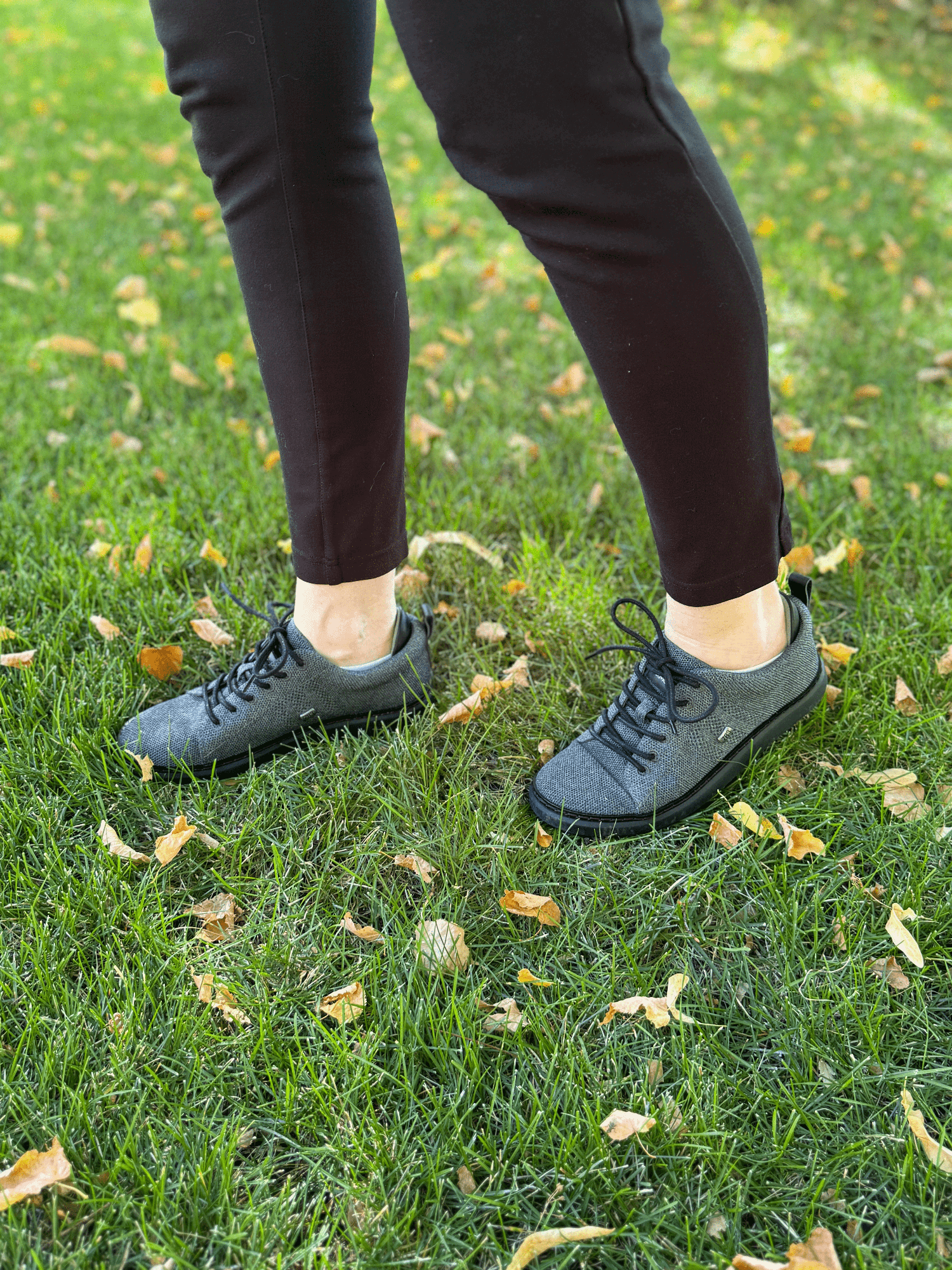
Your day matters, too. A short outdoor walk in the evening, time on natural ground. Or time in conductive footwear may help you build a grounding habit before you start your normal bedtime routine. Harmony 783 footwear is designed for everyday grounding, so you do not have to go barefoot to add grounded time to your life.
A Practical Evening Grounding Routine
You do not need a perfect wellness ritual. Keep it simple enough to repeat. The goal is to add consistent grounded time to your day without overhauling your entire schedule.
The most effective grounding routine is the one you can stick with. Start small, aim for consistency over intensity, and let the habit build naturally. Even 10 to 15 minutes of daily grounding is a meaningful starting point.
- Get outside for 10 to 20 minutes. Walk on grass, soil, or sand when it is safe and comfortable. Early evening is an ideal time because it aligns with the natural wind-down period of your day.
- Wear conductive footwear during your wind-down. Use your normal evening walk, chores, or quiet time to add more grounded hours without setting aside extra time.
- Try grounding indoors with a mat or sheet. If going outside is not practical, a conductive mat or sheet connected to a grounded outlet can provide similar benefits while you read, watch television, or rest.
- Lower the stimulation. Dim lights, put your phone away, and choose a quiet activity such as reading or gentle stretching. Bright screens before bed can interfere with the natural drop in melatonin that helps you sleep.
- Keep the same bedtime window. A regular schedule gives your body a clearer cue that it is time to rest. Even on weekends, staying within 30 minutes of your normal bedtime helps maintain rhythm.
- Pair grounding with deep breathing. While you are grounded, take five slow breaths, inhaling for four counts and exhaling for six. This combination may amplify the calming effect for some people.
- Track one metric only. Choose one thing to watch, such as how rested you feel when you wake. Tracking too many variables makes it hard to see patterns. Give the habit time and notice trends over weeks, not days.

Tips for Getting Consistent Grounding Hours Each Day
Consistency is the factor that comes up most often in grounding research. Participants who spent more total hours grounded over the study period tended to report better outcomes. Here are a few ways to build grounded time into a typical daily routine without making it feel like another task on your list.
The single most practical step is to choose grounding footwear that you will actually wear during your normal daily activities. When grounding becomes part of your existing routine rather than a separate activity, consistency takes care of itself.
Start by identifying one part of your day that is already predictable. Morning coffee on the porch, the evening dog walk, watering the garden, reading before bed, or cooking dinner are all windows where grounding could fit naturally. If you spend 15 to 20 minutes outdoors in the morning and another 20 to 30 minutes winding down indoors with a grounded mat. That adds up to nearly an hour of grounding time each day.
For people who spend most of their day indoors. A grounded floor mat at a standing desk or a grounded sheet on the bed can provide hours of passive grounding with zero extra effort. The key is to make the choice easy enough that you do not have to think about it. When grounding gear is already in place, you naturally accumulate hours without planning or reminding yourself.
Browse the Harmony 783 collection to find grounding products that fit your lifestyle, from sandals and walkers to mats and sheets.
What the Research Cannot Yet Tell Us
A careful answer matters. Grounding research has real gaps. Many studies are small. Some rely on participants describing how they felt, rather than measuring sleep in a lab. Products, study methods, and timeframes also vary. This makes it hard to compare results or name one best method.
The honest answer is that grounding research is still in its early stages. The existing evidence is promising but not strong enough to support clinical recommendations. More rigorous, independently funded studies with larger sample sizes are needed to confirm whether the reported benefits hold up under controlled conditions.
Grounding is not a cure for chronic insomnia, sleep apnea, depression, pain conditions, or other medical concerns. If poor sleep lasts for weeks, affects your safety or daily life, or comes with snoring and breathing pauses, talk with a qualified healthcare professional. A thoughtful sleep plan may include medical support as well as healthy daily habits.
The most useful takeaway is modest: earthing may be a worthwhile wellness habit for people who enjoy it, and early research gives a reason to keep studying it. Use it alongside the habits that help you feel calm, comfortable, and ready for bed.
Browse the collection to find grounding footwear that fits your daily rhythm.
Frequently Asked Questions
Can earthing improve sleep quality?
Small studies suggest it may help some people feel more rested, fall asleep more easily, or wake less often. The research is promising but limited. Grounding is best viewed as a wellness practice that can complement a consistent sleep routine. Most participants in the available studies reported noticeable improvements after several weeks of regular grounding.
Does grounding help with insomnia?
One placebo-controlled study found lower insomnia-severity scores with earthing mats. That does not mean grounding treats insomnia. Ongoing or severe sleep trouble should be discussed with a qualified healthcare professional. Grounding is not a substitute for medical evaluation or treatment of sleep disorders.
How long should I ground before bed?
There is no proven minimum. A consistent 10 to 20 minutes outdoors, or more grounded time during your normal evening routine, is a practical place to start. Give a routine several weeks before judging it. Total daily grounding time across your whole day matters more than the timing of any single session.
Can I use grounding footwear as part of my sleep routine?
Yes. Grounding footwear can make it easier to spend time grounded while walking, relaxing, or doing light evening tasks. The sleep studies most often used mats or grounded bedding, so footwear should be seen as a way to build grounded time, not as the same intervention. Many people find that a short evening walk in grounding sandals helps them wind down naturally.
Is grounding safe for everyone to try?
Grounding is generally considered safe for healthy adults. People with certain medical conditions such as epilepsy, those taking blood-thinning medications, or anyone with an implanted electronic device should talk to a doctor before trying grounding products. As with any wellness practice, it is wise to start slowly and pay attention to how your body responds.
The Takeaway
The question is not whether one night of earthing will transform your sleep. It is whether a calmer, more consistent evening routine with grounding can support the way you already care for your rest. Early grounding research says it may help some people. The strongest approach is to stay curious, keep expectations realistic, and build the habit around the sleep basics that work for you.